case study
Homeward
A CRM built around how a real estate agent actually works: one contact with many plans, and follow-ups that create themselves.
- Client
- A Melbourne real estate agent
- Industry
- Residential real estate
- What we did
- Product design, web app, automations, MCP integration
- Platform
- Web app
The brief
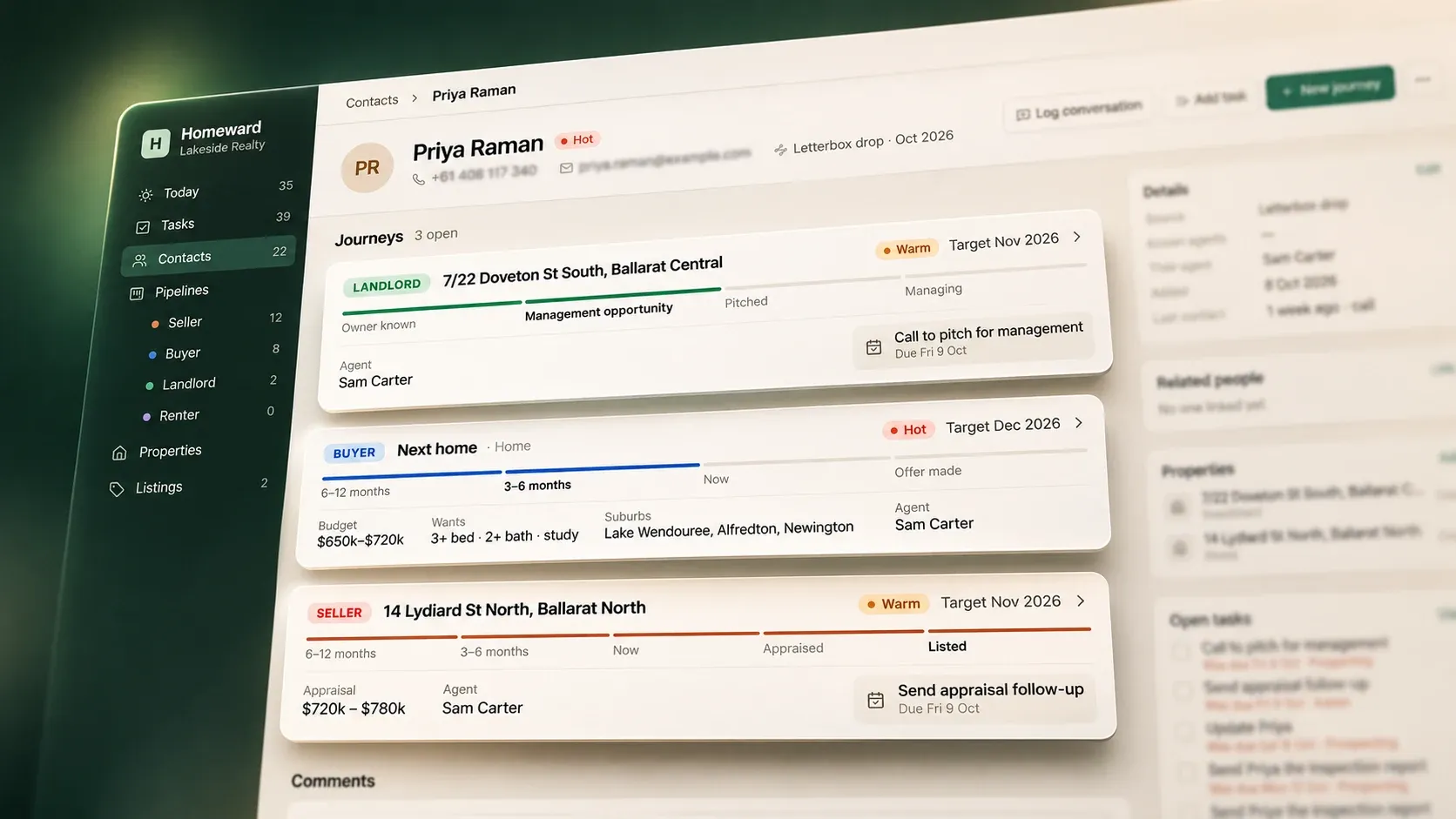
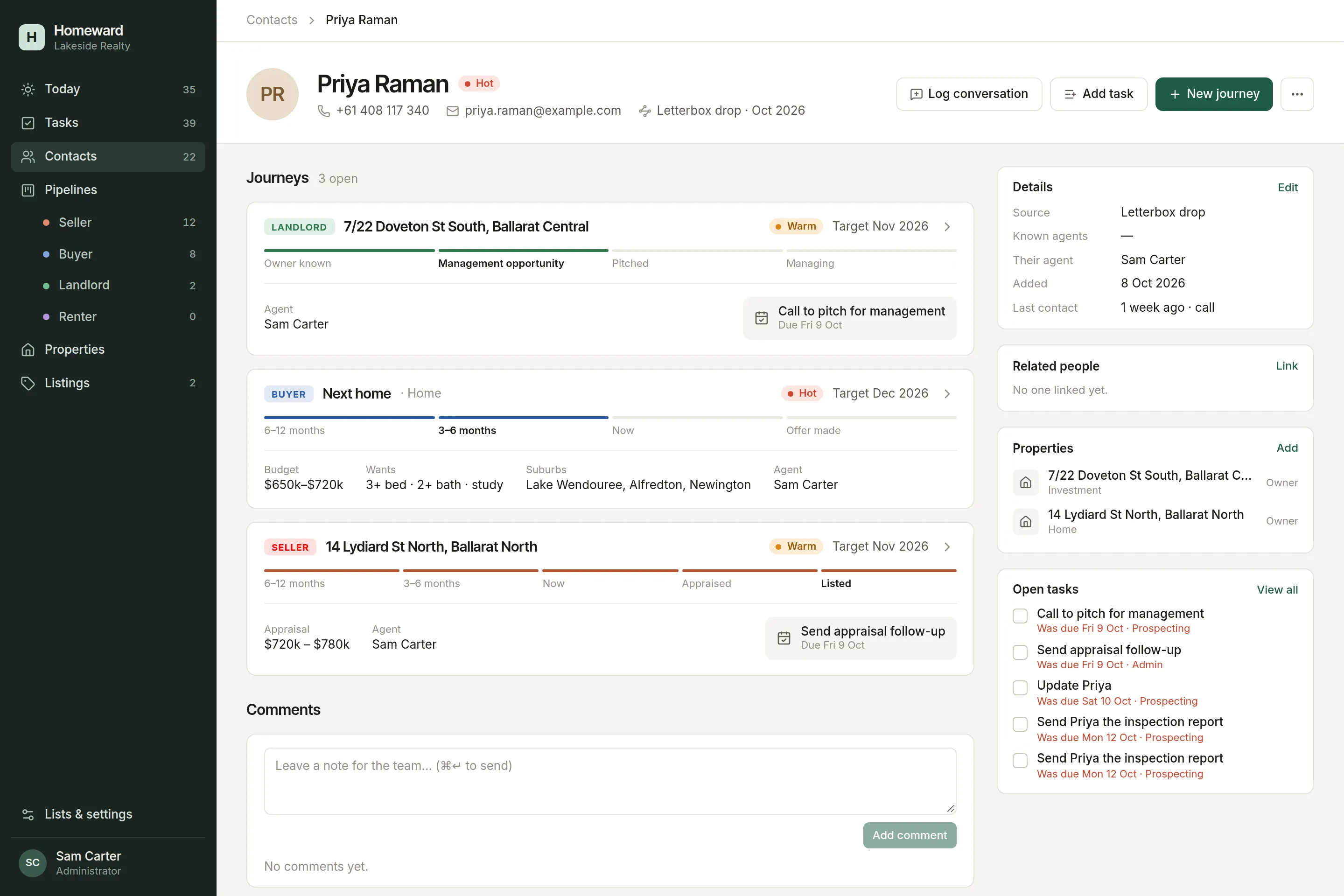
The agent’s old CRM stored each person once, with one label. But a vendor might also be buying, and later become a landlord, so the real picture lived in their head.
Follow-ups depended on memory too: lease renewals, authority expiries, “call back in 12 months”. The goal was a system that shows the whole pipeline at a glance and makes sure nobody falls through the cracks.
What we built
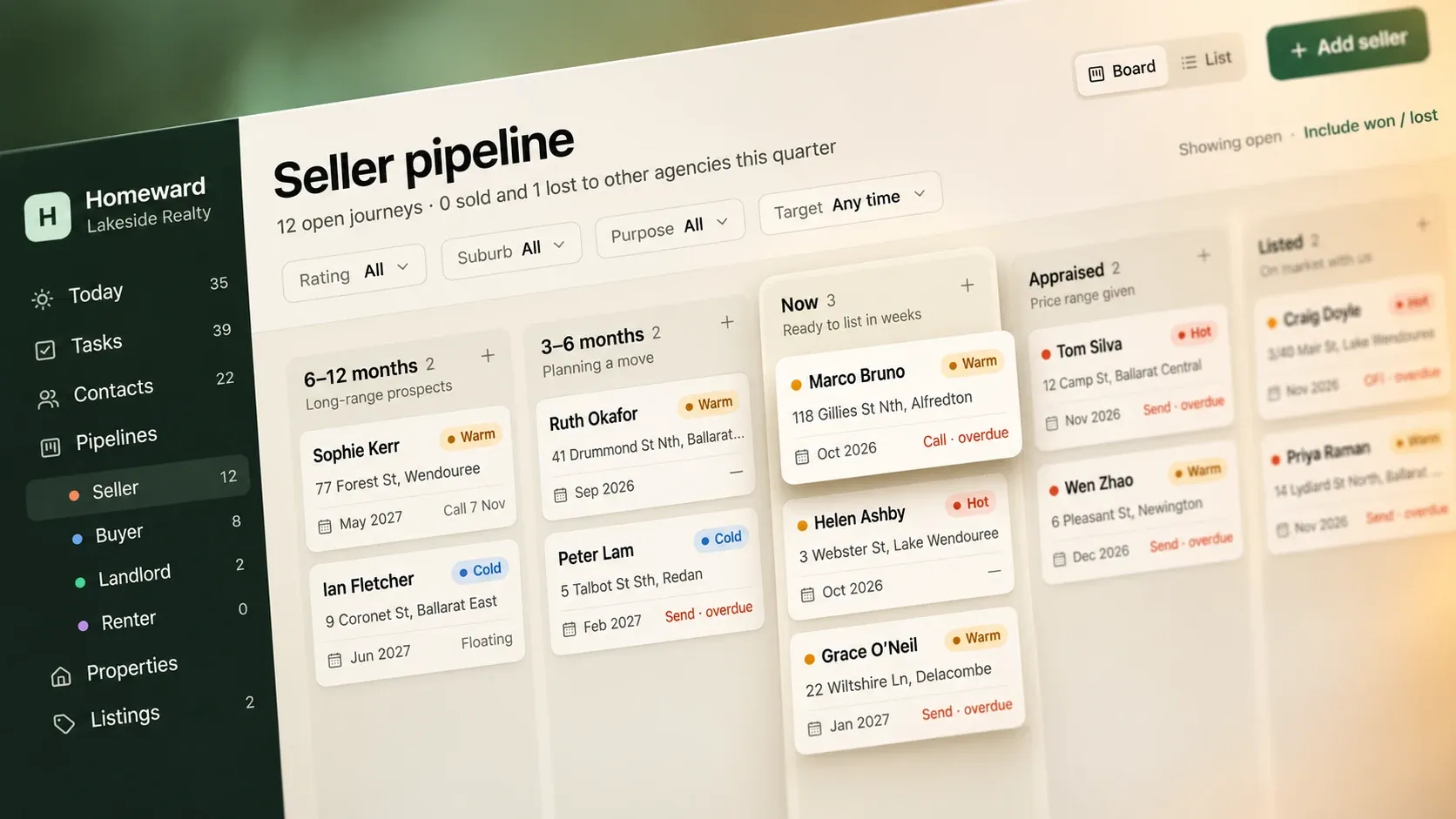
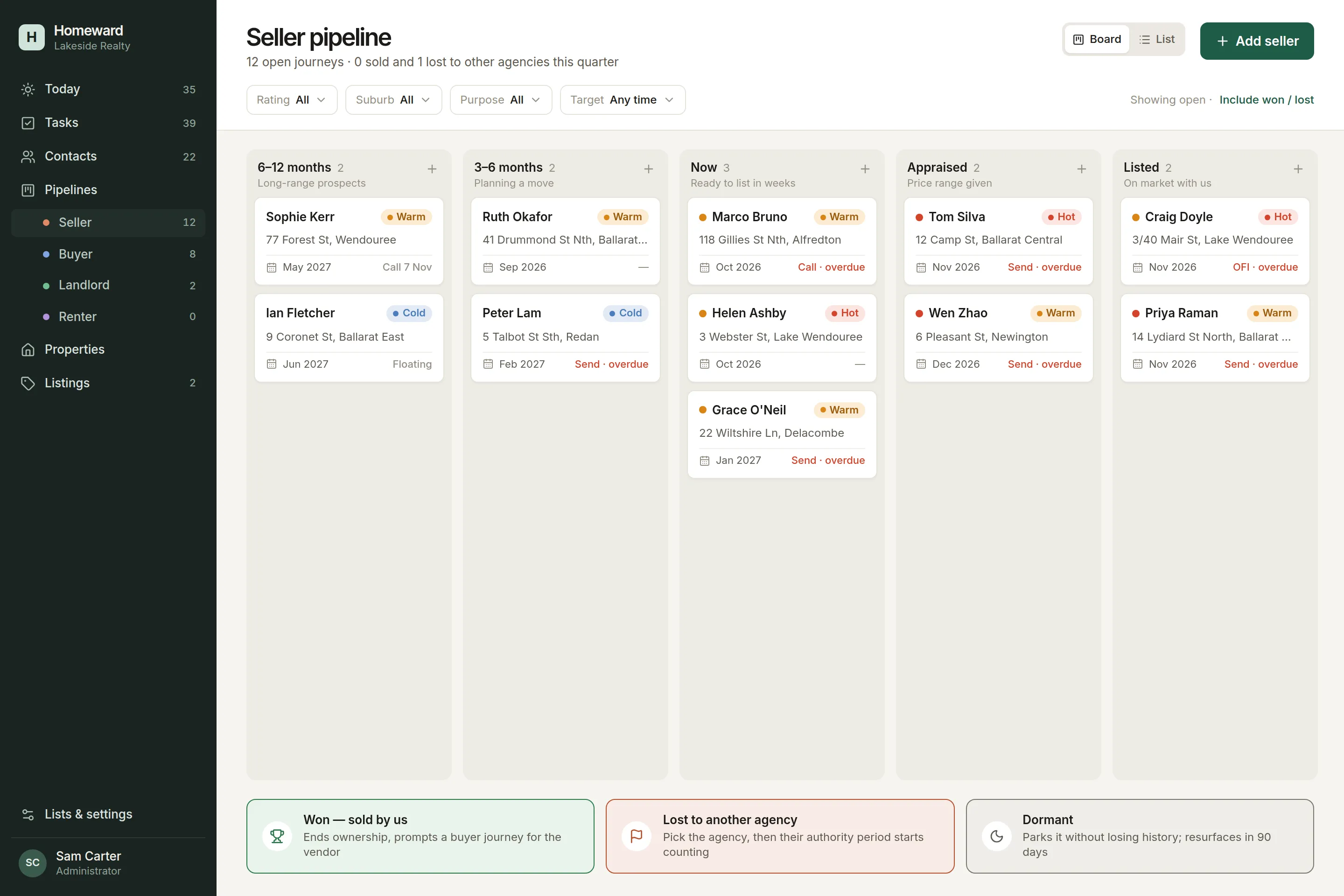
- One contact, many journeys: seller, buyer, landlord and renter plans, each on its own pipeline board
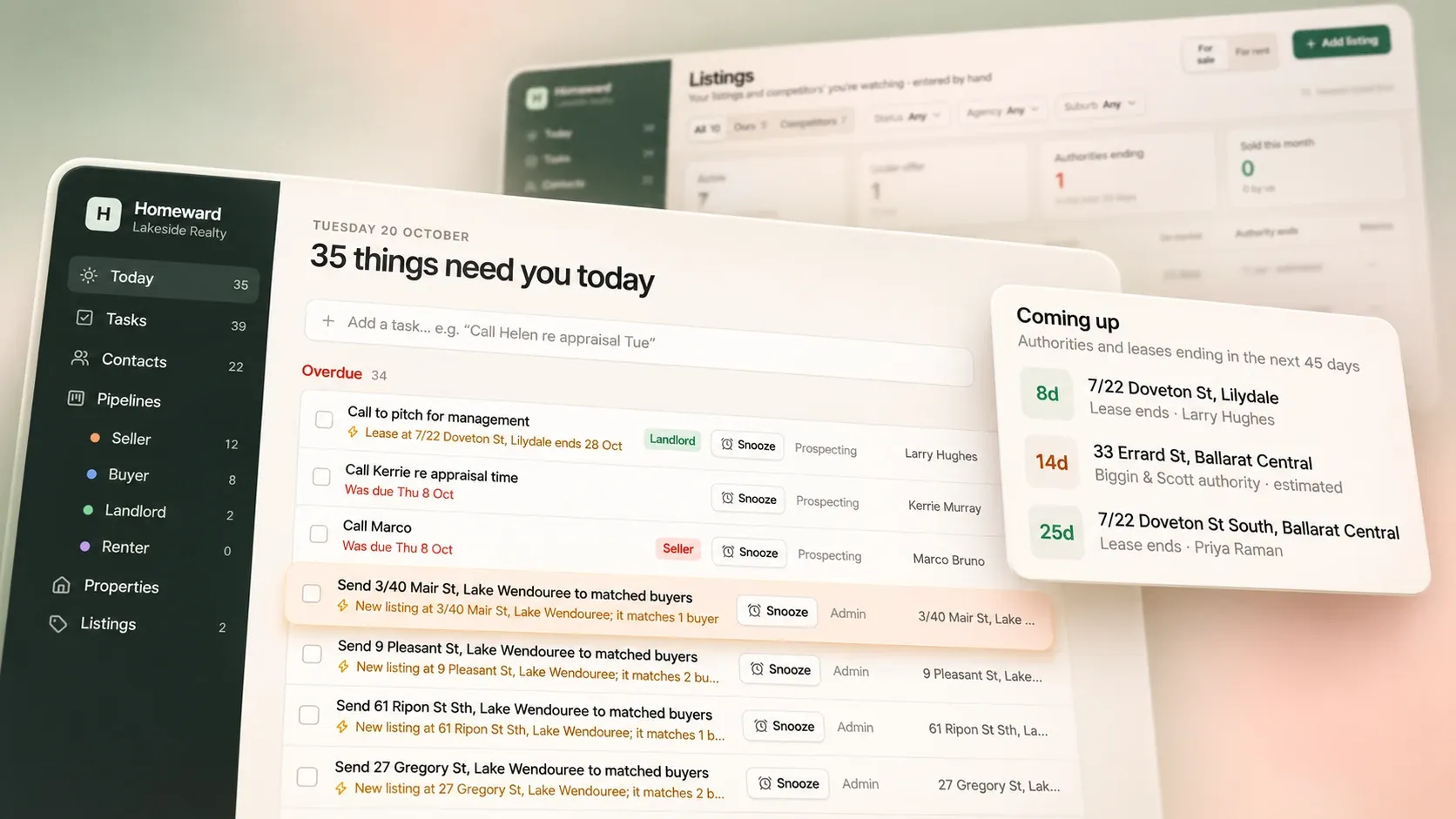
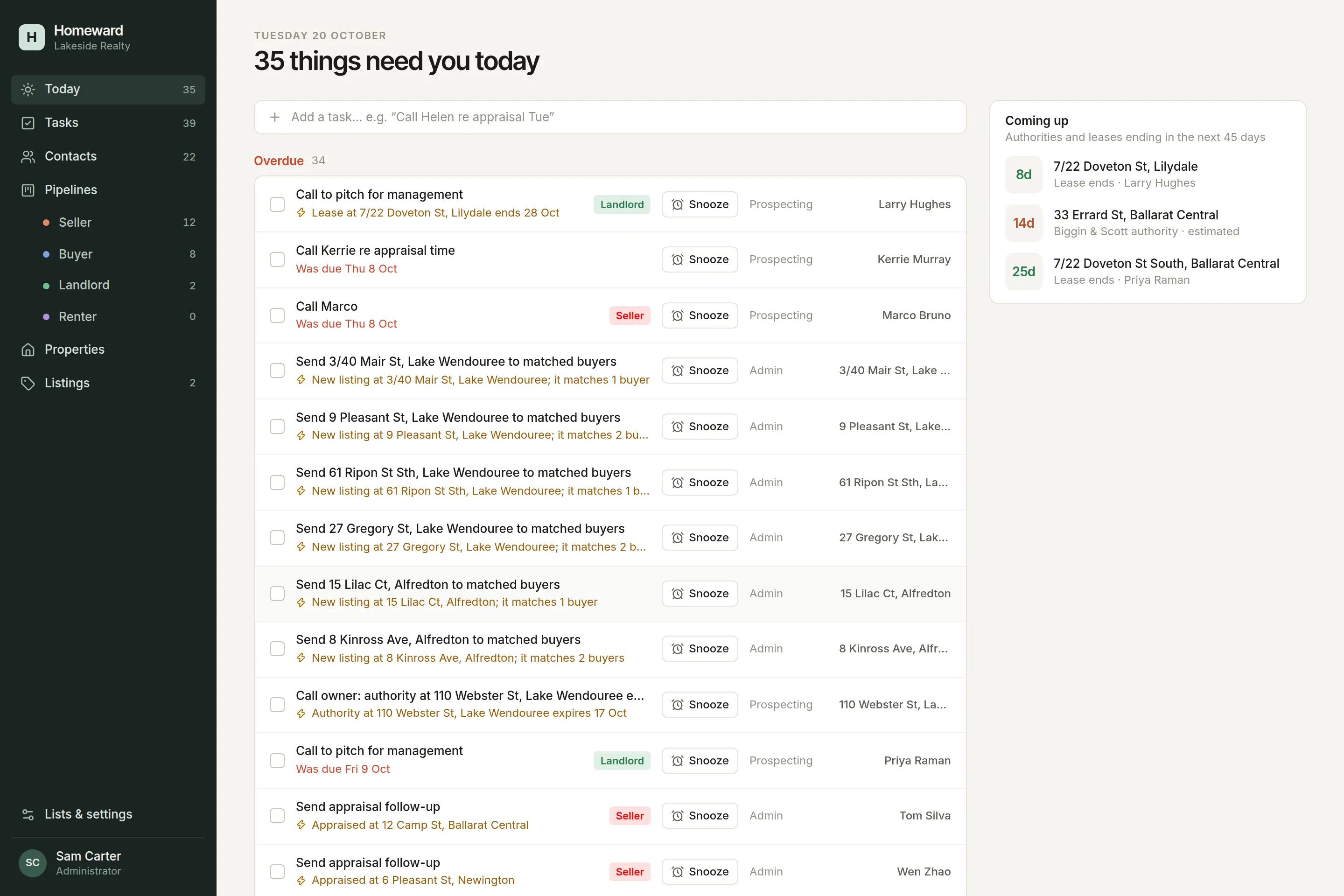
- A Today screen that lists what’s overdue, due today and coming up
- Automatic tasks ahead of lease renewals and authority expiries
- New listings that create a task to contact every matching buyer
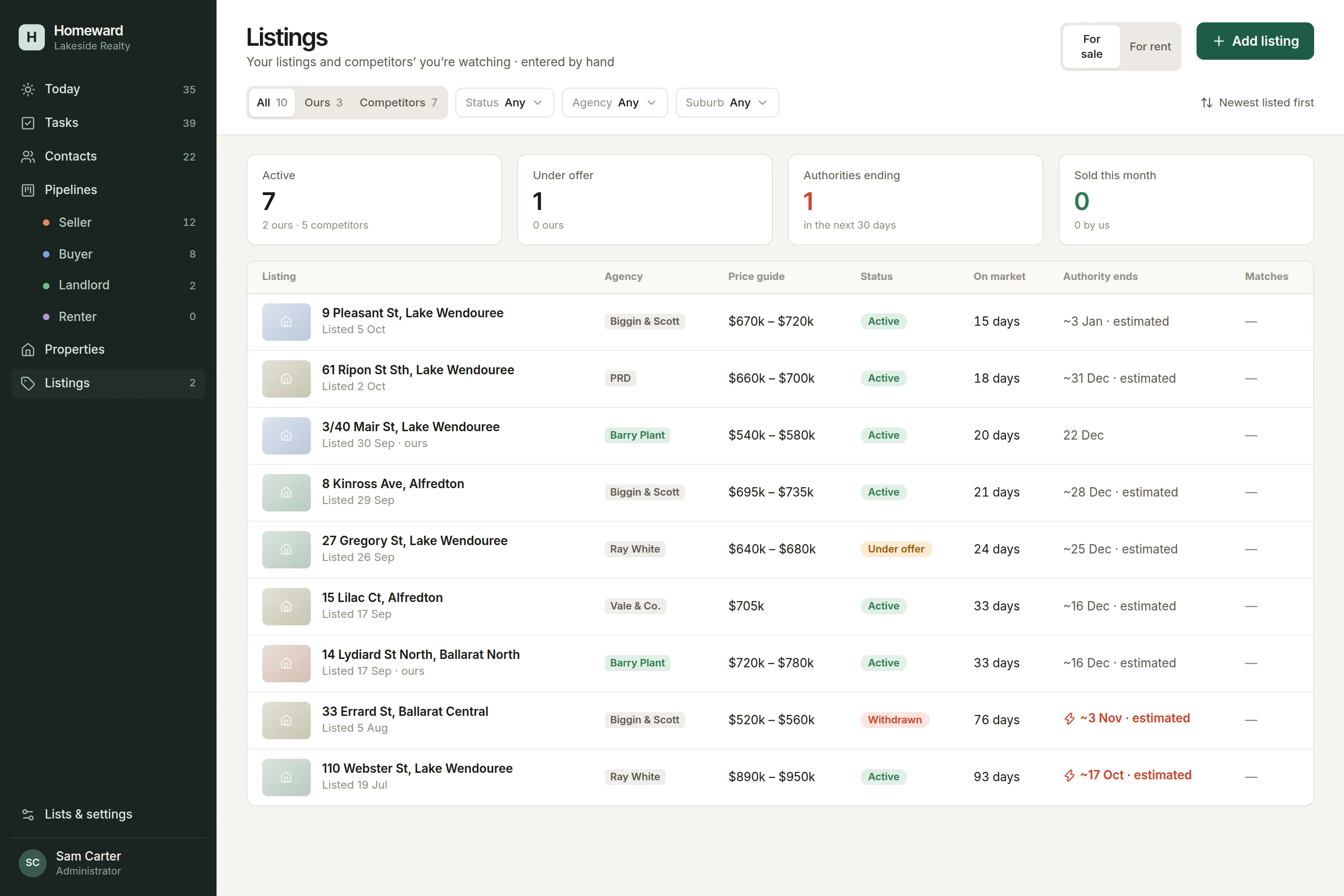
- A listings tracker covering competitors as well as the agent’s own
- An MCP server, so AI tools can read and update the CRM
nothing slips
The day’s work, already sorted.
Today pulls every call, follow-up and automatic task into one list, with leases and authorities ending soon on the side. Tasks the system created are marked, so the agent can see why each one is there.
Built to grow with the business
Runs on events
Moving a card, a sale or a date arriving triggers the follow-up, so nothing depends on memory.
Lists the agent controls
Stages, sources, suburbs and other choices are data the agent edits, not settings a developer has to change.
Ready for AI tools
An MCP server, the open standard AI tools use to connect to other software, lets those tools look up contacts, log calls and add tasks.